Showing posts with label safety. Show all posts

Friday, February 18, 2022

What's hiding in your basement?


Radon is a cancer causing radioactive gas. It doesn’t have any odor or taste.  It comes from the natural decay of uranium that is found in nearly all soils. Radon can be found in any building including your home, workplace, daycare, and school. It gets in through cracks, gaps around service pipes, cavities inside walls, gaps between floors, and other holes in the foundation and becomes trapped inside. Your greatest risk of radon exposure is your home because that is where you spend the most time. Any home could have the presence of radon including new and old homes, well-sealed and drafty homes, and homes with or without basements. Radon tends to be a little more prevalent in western New York (because of the type of rock in that region), however here in Clinton County we are still at moderate risk.

The good news is you can find out if you have radon by testing for it. Radon is colorless and odorless
like carbon monoxide. Testing is the only way to tell if you have radon present in your home. By testing for radon, you will know if you have a build up from over time which can
Radon Test Kit
cause lung cancer. 

So why do we care now? Radon builds up in our buildings and homes as we close things up for the winter to keep the heat in. While we’re keeping the heat in we’re also keeping the radon in. Add in less ventilation and you’ve got a recipe for radon. Keeping our windows and cellars sealed tight from November through March makes it prime time to do radon testing. 

Even if you have tested for radon in the past, you should test for radon every five years. Tests take only a few minutes to set up and complete. If you do not want test yourself, The Healthy Neighborhoods Program in Clinton County can help by setting up radon tests for Clinton County residents free of charge.

How can I get a free radon test kit? Contact the Clinton County Healthy Neighborhoods Program at 518-565-4870 to schedule a home visit. Radon is just one area of indoor air quality and home safety that the Healthy Neighborhoods Program addresses. Free radon test kits and other home safety products are available based upon your household’s needs. For more information about this free service, check out our website www.clintonhealth.org/healthyneighborhoods.


Maryann Barto

Public Health Educator

Healthy Neighborhoods Program

Environmental Health & Safety Division

Monday, January 13, 2020

Ice, Ice, Baby!


Whoa. Mother Nature showed us some fury this weekend…wind, rain, freezing temperatures, ice, more wind, a little snow and oh, an earthquake too. Winter weather is in full swing and so are weather related injuries. 

All right stop. 

Collaborate and listen. 

First off, if you’re planning on doing any break-dancing I would suggest staying inside or it may end up more like a slip-n-slide. Once you’re done dancing I want to share with you some fool proof ways to keep both feet firmly on the ground.
  1. Keep your hands free, not in your pockets. This will allow you to brace yourself should you slip and fall.

  2. Wear proper shoes. I know heels and leather-soled shoes are more fashionable, but boots with rubber soles will help keep you upright. If it is really icy use ice cleats or creepers for added traction.
  3. Check before you step. Ice and slippery surfaces are not always easy to see. If you think an area may be slippery test the area without using the full weight of your body.
  4. Avoid carrying heavy loads when walking over areas packed with snow or ice.
  5. Don’t run across wet, icy or snow-filled surface. That is just asking for trouble.
  6. Use handrails, walls, door handles and other secure objects to brace yourself when stepping onto icy or snowy surfaces.
  7. Take short steps, with your feet pointed out slightly, like a penguin.
  8. Stay on cleared sidewalks or paths and keep your own driveway and sidewalk clear of snow and ice.
  9. Dress warm. When your body is cold your muscles are tense and that can affect your balance.
  10. Ask for help if you need it.
Remember, if the weather is bad and you don’t have to leave the house, stay put. Warm up a nice cup of tea and finish off the book that’s been sitting half-finished on your nightstand. Your errands will still be there tomorrow.

For more winter safety tips head on over to our 2019-2020 Winter Safety Guide.

Molly Flynn, Senior Public Health Educator 
KayLeigh Raville, Public Health Nutritionist 
Health Planning and Promotion Division 

Wednesday, April 24, 2019

Summer bike riding; how to be wheelie careful.


I can still remember my first bicycle; it was a hand-me-down from my older brother. It had a blue frame, white handlebar grips and a multi-color banana seat. It didn’t matter to me that it was an older used bicycle, all I cared about was that it was all mine.

A bicycle is the first form of transportation most of us use, but typically once the training wheels are gone so is the education. However, each year 100 children die and 245,000 are injured as a result of a bicycle-related accident.

Not all of these accidents are caused by lack of skill or education of the rider; often a poorly maintained bicycle is to blame. The ABC quick check (detailed below) takes less than five minutes and can help to prevent injuries and inconveniences (like a broken chain far from home).

A is for Air: Check the air pressure in your tires. Similar to a car, the recommended air pressure (or PSI) is written on the sidewall of your tire. Use a pressure gauge to reduce the risk of injuries caused by over or under inflation.

B is for Brakes: Pay attention to the wear on your brake pads. Most brake pads have grooves cut in them to help clear debris. When any part of those grooves disappear it’s time for new pads. Also, hold down your brake lever and check to see that your brake pads only make contact with the rim and not the rubber of the tire.

C is for Chain and Cranks: Be sure your chain is rust and gunk free. Pull on your cranks (what attaches your pedal to your bike) to see that they are not loose.

Quick Release: Many bikes have quick release tires and seats. Make sure your quick releases are tightened and secured in a way that won’t catch clothing on the release. If your bicycle does not have quick releases, it is still a good idea to check that your tires, seat, and handlebars are all properly tightened and secured.

CheckTake a slow, short ride to check that your bike is working properly.

After your bike has been checked, looking at your helmet should be your next step. Wearing a properly fitted helmet is crucial to bike safety. Be sure to check your helmet before each ride for cracks or dents that may make it less effective in the event of a crash.

Once you are cruising through the neighborhood the keys to safe cycling are visibility and predictability. In most riding situations you’ll need to know how to ride safely around cars, other cyclists, and pedestrians. The best way you can stay safe around such a wide variety of road users is to be seen and predictable with your actions.

  • Ride where people can see you. Many children and new cyclists tend to ride only on the sidewalk. While it can be safer to travel on the sidewalk in busy areas, it is actually safer to travel in the same direction as traffic on the road.
  • Wear bright clothing. It is important to be as visible as possible. Wear colors like yellow, orange, and red to increase your visibility. Keep a yellow reflective vest handy in case you are wearing darker clothing or are riding at night.
  • Use a front white light, rear red light and reflectors at dusk and in bad weather. Just like a car has front headlights and rear red running lights, a bicycle should too. Many cyclists turn on their lights no matter what time of day or weather conditions to increase visibility.
  • Make eye contact. Eye contact can communicate our intentions. When at a four-way stop, take a moment to make eye contact with other drivers before proceeding through the intersection. This ensures that other drivers see you and do not try to use the intersection at the same time.
Bicycle hand signals
  • Scan, signal, scan before you turn. Scanning the area around you ensures the lane is free and also alerts motorists in the lane that you are about to change your position. You should then signal your turn, and then scan again before turning. 
  • Signal your turns. After you scan to check if the lane you want to use is free, you must signal your intentions. Signaling on a bicycle is just like signaling a turn in a motor vehicle. You should signal for 4-6 second before returning your hand to the handlebars.


Can’t get enough bike safety?  Join us for the Bike Block Party on May 18, 2019 from 10:00 am to 2:00 pm at the Plattsburgh Farmer’s Market. The first 125 participants will receive free safety gear and a new, properly fitted helmet!


Be Seen, Be Predictable, Stay Safe

Kim Cummins
Bike Block Party Planning Committee

Sunday, October 21, 2018

Teal is the New Orange


A few years ago I would not have known what this title meant, and maybe as you are reading it right now, you are questioning the same thing. I would not have realized how important the color teal is to millions of Americans all over the country, and how important it has become to our family.

My two and half year old son has a rare allergic disorder, eosinophilic esophagitis which causes inflammation in his esophagus, and makes him extremely sick if he eats certain foods. My son is lucky, in that his only food allergy is dairy.  However, many children and adults are allergic to many different foods. It is always a challenge when we go to special events, such as birthday parties and holiday gatherings.  I am that mom who carries bags and coolers of food around, so he can eat just like all of the other kids, and not feel different or feel left out.

Halloween is a special event, that yes, we are most definitely looking forward to.  But it is especially tricky (pun intended) for kids and families with food allergies, like us. Many of the traditional Halloween treats contain common allergens like peanuts, tree nuts, milk, egg, soy or wheat. Lots of the fun-size versions of candy items contain different ingredients than their full-size counterparts, and do not have ingredient labels, so it can be a real challenge when trick-or treating.

Here is where the color teal comes in. Teal is the color of food allergy awareness. The Teal Pumpkin Project is a worldwide movement that not only brings awareness, but it also helps those who suffer from food allergies to feel more included and safe on Halloween.

For four years, people have been placing teal pumpkins outside of their homes to show that they have non-food treats for children with food allergies and medically-necessary dietary restrictions.

Participating in the movement is easy:

  • Place a teal pumpkin outside of your home, 
  • Provide non-food treats
  • Add your home to the teal pumpkin project map, and  
  • Spread the word with friends and family.

Not only are food allergies life-altering and potentially life-threatening, but the disease is also a growing public health issue. In the U.S., one in 13 children has a food allergy – that’s roughly two in every classroom. The Teal Pumpkin Project is simple, but the impact it can have on those living with food allergies, is immense.

My family will be looking for teal pumpkins this Halloween for good reason but we want all families to avoid Halloween hazards we all need to be aware of.  For a quick rundown of safety tips to keep your little pumpkins safe, click here.  

Lindsay Dareff, RN
Registered Professional Nurse 
Health Planning and Promotion 

HABs – Say Algae You Later!

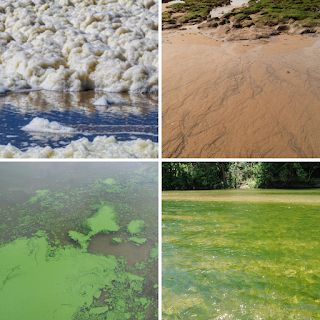
Being a Clinton County native, summer notifications of harmful algal blooms (HABs) at local beaches are nothing new. Certain places in our ...