Showing posts with label Environmental. Show all posts

Friday, February 18, 2022

What's hiding in your basement?


Radon is a cancer causing radioactive gas. It doesn’t have any odor or taste.  It comes from the natural decay of uranium that is found in nearly all soils. Radon can be found in any building including your home, workplace, daycare, and school. It gets in through cracks, gaps around service pipes, cavities inside walls, gaps between floors, and other holes in the foundation and becomes trapped inside. Your greatest risk of radon exposure is your home because that is where you spend the most time. Any home could have the presence of radon including new and old homes, well-sealed and drafty homes, and homes with or without basements. Radon tends to be a little more prevalent in western New York (because of the type of rock in that region), however here in Clinton County we are still at moderate risk.

The good news is you can find out if you have radon by testing for it. Radon is colorless and odorless
like carbon monoxide. Testing is the only way to tell if you have radon present in your home. By testing for radon, you will know if you have a build up from over time which can
Radon Test Kit
cause lung cancer. 

So why do we care now? Radon builds up in our buildings and homes as we close things up for the winter to keep the heat in. While we’re keeping the heat in we’re also keeping the radon in. Add in less ventilation and you’ve got a recipe for radon. Keeping our windows and cellars sealed tight from November through March makes it prime time to do radon testing. 

Even if you have tested for radon in the past, you should test for radon every five years. Tests take only a few minutes to set up and complete. If you do not want test yourself, The Healthy Neighborhoods Program in Clinton County can help by setting up radon tests for Clinton County residents free of charge.

How can I get a free radon test kit? Contact the Clinton County Healthy Neighborhoods Program at 518-565-4870 to schedule a home visit. Radon is just one area of indoor air quality and home safety that the Healthy Neighborhoods Program addresses. Free radon test kits and other home safety products are available based upon your household’s needs. For more information about this free service, check out our website www.clintonhealth.org/healthyneighborhoods.


Maryann Barto

Public Health Educator

Healthy Neighborhoods Program

Environmental Health & Safety Division

Saturday, June 27, 2020

Inside Scoop - the Clinton County Health Department’s Rabies program

First a little background, why do we even care about rabies?

Rabies is a deadly, but preventable disease.  Once symptoms appear, the disease is nearly always fatal.

OK, you’ve got my attention now...

Let’s throw out a few scenarios to give you an idea of what we do in the rabies program.

Scenario 1- You lose your frisbee in your neighbor’s yard so you jump the fence to get it and their dog gets startled and bites you. You go to an urgent care to get the wound looked at and they ask you about the dog and the dog owners so they can fill out a bite report to submit to us.

Now you may be saying to yourself “No, I don’t want to get my neighbor’s dog taken away from them, I’m not going to report it.”

We do not harm or take animals away from people.

Here is what we do when we receive a bite report:

·        Use the information you give us to contact the animal owner and make sure the animal is alive and able to be monitored for 10 days.

·        Verify the rabies vaccination status of the animal.

·        Track the animal’s health.  If it is alive and well 10 days after the day it bit you, it did not have rabies at the time of the bite and there is no risk of rabies to you.

Scenario 2- You wake up to a bat flying around your bedroom. Bats have very tiny mouths and you were sleeping so you are not completely sure you didn’t get bit. You caught the bat and have it in a container. You call us to report it and see what you should do next.

Here is what we do when we receive your call:

  •   Fill out a bite report.
  • Retrieve the bat from you and send it away to be tested to see if it had rabies.


The results come in and the bat does not have rabies. This is good news, even if you got bit and didn’t realize it there is no risk of rabies to you.

Wait, but what if I couldn’t catch the bat and it got away?

In this case, if you truly don’t know if you were bitten we are going to recommend you receive postexposure prophylaxis (PEP).

There is a risk for rabies to you and we don’t want to take any chances. Did you know rabies symptoms can show up in people in a few days or not for months?

Postexposure prophylaxis (PEP) - that sounds scary.

It’s not as bad as it sounds!

PEP is a series of shots spread out in 4 visits over 2 weeks. I had to get these shots and I assure you they are no different than your typical flu shot.

Please note these are just some examples, the possible scenarios are endless.  

Ok this is a lot of information at once, let’s wrap it up!

What should you do if you are bitten by a pet or wildlife?

1.     Get the animal owner’s (if there is one) name, address and phone number – this is important!

2.     Note where and when the bite happened and the animal’s color, condition, size and temperament.

3.     Thoroughly wash the wound with soap and water and seek medical attention immediately – animal bites can be infected with many diseases besides rabies.

4.     Report the incident to the Clinton County Health Department (CCHD) by calling 518-565-4870. (Keep in mind we do not take peoples animals from them!)

How can you prevent rabies?

·        Do not attempt to catch or pet strays or wildlife, call animal control if you find a stray animal.

·        Keep rabies vaccinations up-to-date for all cats, ferrets, and dogs.

·        Always ask before approaching someone else’s animal and teach your kids when it is and is not okay to pet an animal.

All animal bites, no matter how minor must be reported to CCHD.

One last thing to mention before you go, another part of the rabies program is that CCHD offers FREE rabies clinics to Clinton County residents. Due to the restrictions in place for COVID-19 we don’t have the date of our first 2020 clinic yet but keep an eye on our Facebook page for an update.

For more information about rabies in Clinton County click here.

Karissa LaBonte

Public Health Sanitarian

Division of Environmental Health and Safety


Friday, March 22, 2019

Spring…is that you?

Spring showers bring May flowers, but, combined with run-off from melting snow, they can also leave your private well water at risk for contamination. If you get your drinking water from a private well, here’s what you need to know.

In Clinton County, 28% of residents get their drinking water from private sources, such as wells, which we (the Health Department) do not oversee. To assist these residents, we began offering water testing to homeowners in 2017. With funding from the Clinton County Soil & Water Conservation District, this program was able to continue in 2018. Of the 109 samples collected from private wells in 2018, one-third (36%) tested positive for total coliform bacteria.

Why does it matter? Even if your water looks, smells and tastes fine, the only way to know if the water in your home is safe to drink is by testing it. Contaminants, such as bacteria, viruses or other pollutants, may be getting into your water. Coliform bacteria are found in the soil, in water that has been contaminated by surface water, and in human and animal wastes. If coliform bacteria are found in water, it means that the water system is not properly sealed, and may be unsafe. In other words, if total coliform bacteria can get into your water, then other bacteria that can make you ill may also be able to get into, or already be in, your water.

When should you test your drinking water? If you are not on public water and get your water from a private source, such as a well, we (the Clinton County Health Department) recommend testing your drinking water:
  • Yearly for bacteria and nitrates. 
  • At least every three years for other water contaminants to make sure nothing has changed. Long-term exposure to even low levels of contaminants can effect your health.
  • When you are expecting a baby.
  • When your water changes in smell, taste, or color. If this happens, drink bottled water and call us at 518-565-4870 to find out which tests you should do. 
  • If you perform any maintenance on your water system, like install a new pump, new water softener or make other repairs. Test for bacteria after disinfecting and flushing. 
  • If you put in a water treatment system to fix a problem. Test the treated water each year for that problem (contaminant) to ensure treatment is working properly.
    Drilled Well with a sanitary cap.

What else? Spring is also a good time to assess the condition of your private well. Start by checking the area around your well—keep it clean and free of animal waste and other pollution. Check your well’s cap—it should have a tight fitting sanitary (waterproof) cap in place. Make sure the well casing extends above ground level to prevent flooding of the well head. Lastly, keep possible sources of contamination, such as septic systems, manure storage piles, and fuel oil tanks, as far away from your well as possible.

If you are a homeowner and would like to have your well water sampled by CCHD, click here to sign up. We also created videos to help homeowners understand their wells, which are now available on our YouTube channel here.

Stay “well”!

Tim Simonette
Senior Public Health Sanitarian
Environmental Health & Safety Division


Monday, May 21, 2018

Tick Tock - Time to be on the Lookout for Ticks


The long-awaited warmer weather has arrived and, like many, I’m eager to spend more time outdoors with my family. However, there is one thing I’m not excited about—ticks.  While ticks are very small, they can spread many different diseases, potentially causing big problems for our health. Locally, Lyme disease (carried by the deer or black-legged tick) is the most common illness transmitted by ticks.  Young deer ticks, called nymphs, are brown and the size of a poppy seed—less than 2mm!  Unless you’re looking for them, they can be easy to miss.  This is why we do daily tick checks in our family – and why I would recommend for you to add a quick tick check to your daily routine.  Ticks have been in the news frequently over the past couple of years as tick populations continue to grow, yet many myths about ticks still exist.  Here’s what you need to know to keep you and your loved ones safe:
·         Deer ticks are most commonly found outdoors in shady, moist areas at ground level.  They also live in lawns and gardens.  Just because you haven’t been outside doesn’t mean you’re safe from ticks—pets can carry ticks into your home.
·         Ticks can attach to any part of the human body but are often found in hard-to-see areas such as the groin, armpits, and scalp.
·         Not all ticks are infected.  Your risk of disease is greatly reduced if the tick is removed within the first 24-36 hours.
·         To remove a tick, use fine-tipped tweezers to grasp the tick at the surface of your skin and pull the tick straight up and out.
·         Keep an eye on the bite site for the next 30 days and know what signs and symptoms you should watch for.
·         Protect yourself from future tick bites by using an EPA-registered insect repellent and wearing the correct clothing. You can also take steps to reduce the number of ticks around your home.

Jennifer Trudeau, RN
Principal Public Health Educator

Wednesday, June 21, 2017

What's Biting You?

Summer in the Adirondacks is finally here. It’s time to enjoy all that our beautiful region has to offer, from activities at the lake, walks on one of our many local trails, to hiking our scenic mountains. Unfortunately, it’s also the time of year that pests like ticks and mosquitoes are most common. Aside from being annoying, infected ticks and mosquitoes can spread diseases. Lyme disease and West Nile virus (WNV) are two of the more common tick- and mosquito-borne illnesses in our community. PREVENTION is your best defense to keep yourself and your family healthy.

Take the following steps to prevent tick and mosquito bites:
·         Use an Environmental Protection Agency (EPA)-registered insect repellent that contains 20-30% DEET, picaridin, IR3535, or oil of lemon eucalyptus.
·         Cover your skin as much as possible. Wear enclosed shoes, long pants and a long-sleeved shirt. Tuck pant legs into socks or boots and shirt into pants.
·         Wear light-colored clothing with a tight weave to spot ticks easily.
·         Cover baby carriers and strollers with mosquito netting when outside.
·         Treat clothing and gear (such as boots, pants, socks, and tents) with permethrin or purchase permethrin-treated clothing and gear. Mosquitoes may bite through thin clothing.
·         Take a shower as soon as you can after coming indoors to wash away unattached ticks.
·         Look for ticks on your body. Young ticks are usually the size of a poppy seed, while adult ticks are about the size of a sesame seed. Ticks often hide under the armpits, behind the knees, in the hair, at the waistline, and in the groin.
·         Put your clothes in the dryer on high heat for at least 10 minutes to kill any remaining ticks.

Watch the video below for instructions on what to do if you find a tick. We hope that you and your family enjoy a long, beautiful, healthy, pest-free summer. (http://bit.ly/2rDoj9y)


For more information on ticks visit http://www.clintonhealth.org/ticks, and for more information on mosquitoes visit http://www.clintonhealth.org/mosquitoes. 

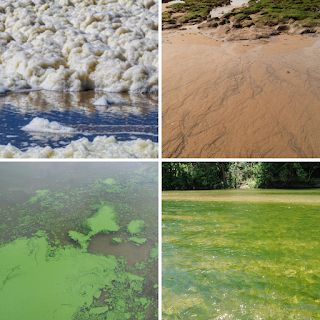
HABs – Say Algae You Later!

Being a Clinton County native, summer notifications of harmful algal blooms (HABs) at local beaches are nothing new. Certain places in our ...