With summer looking like it is here to stay I am ready to enjoy the fresh air and sunshine. But it seems like every time I try, I find myself swarmed by mosquitoes or picking ticks out of my dog’s fur. I’M BUGGING OUT! Luckily there are some fool-proof tips and tricks to help reduce your chances of getting bitten by both, and to save a little bit of sanity.
Let’s start with ticks. These creepy, crawly pin-heads (no, seriously they are the size of a pin head) spread diseases that make you sick. In our area, our biggest concern is Lyme disease, but we also see a few cases of Anaplasmosis and Rocky Mountain Spotted Fever each year. Cases of Lyme disease have increased 200% in Clinton County over the past 3 years. Grossed out? Me too. But we can take a few easy steps to avoid run-ins or bites from these guys.
1. Avoid areas they like. This includes grassy, bushy, brushy areas with tall grass and leaf litter.
2. Prepare for an encounter. You don’t need to be deep in the woods to get a tick bite; the run-in could happen in your own backyard. Before you head outdoors:
- Apply an EPA-registered insect repellent.
- Cover your skin as much as possible (enclosed shoes, long pants and shirts, tall socks).
- Wear light colors. This makes spotting a tick easier.
- Treat clothing with permethrin.
3. Remove any ticks before they have a chance to bite.
- Do a tick check on your whole body using a mirror to see the tricky areas. See figure 1 to learn where to look on people and pets.
- Take a shower as soon as you can. This will wash away any unattached ticks.
- Put the clothes you wore in the dryer for at least 10 minutes on high to kill any ticks.
 |
| Figure 1 |
If you do find one of these pesky little dudes latched on,
keep an eye on the bite site
for a few weeks. If you develop a fever, chills, headache, rash, muscle or
joint pain, or swollen glands within 30 days of your bite, contact your doctor.
Be sure to let them know about your tick bite.
On to the most annoying creatures on the planet – mosquitoes! While
they can carry diseases like West
Nile Virus and Eastern Equine Encephalitis,
in Clinton County they tend to be more of a nuisance than a disease spreader.
If you seem to have an overabundance in your backyard, chances are you are to
blame. How so? Mosquitoes lay their eggs in or near water. Then their babies
grow-up in that water before flying away and biting. This entire process only
takes about a week! So step one in reducing
mosquitoes around your home is eliminating standing water at least weekly.
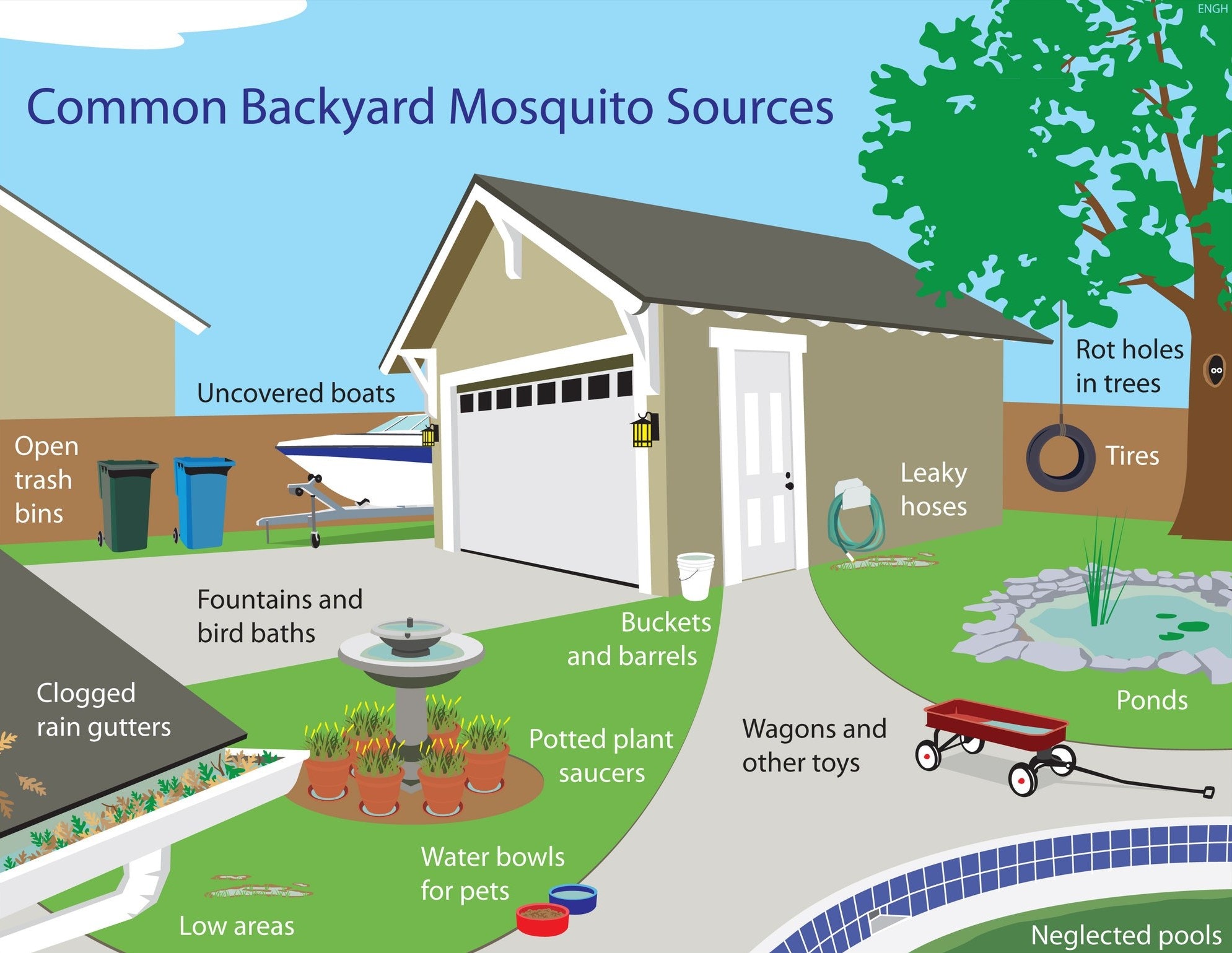
Empty and scrub, turn over, cover, or throw away items holding water. Some examples include: tires, buckets, planters, toys, pools, birdbaths, flowerpots, and trash containers (see figure 2).
Figure 2 - Make sure your gutters are draining properly.
- Tightly cover any water storage containers – like buckets, cisterns and rain barrels. If it doesn’t have a lid, cover is with wire mesh.
- Repair gaps or cracks in your septic tank. Cover open vent or plumbing pipes.
- Drill holes in the bottom of recycling containers if you keep them outdoors.
· When used as directed, insect repellents are the BEST protection.
- Always follow the product label instructions
- Reapply as directed.
- Do not spray on the skin under clothing.
- If using sunscreen AND insect repellent, apply sunscreen first, then the insect repellent.
- Store out of reach of children.
- Do not allow children to apply it themselves.
- Do not use it on children younger than 2 months.
- When applying to children, apply it to your hands first. Then rub it onto the child’s skin.
Don’t forget to keep the mosquitoes outside. Repair screens
and keep doors closed.
Don’t let ticks and mosquitoes ruin your summer. Prepare for
them, take steps to avoid them, and be ready to treat bites
in case one or two get through. For more tips on having a safe and healthy
summer, check out our Summer
Safety Guide. Missed our Spring
Safety Guide? No problem!
Molly Flynn
Principal
Public Health Educator
Division of
Health Planning & Promotion