Thursday, June 27, 2019

Goodbye WIC Checks, Hello 21st Century!

The new eWIC card.

Remember the days of WIC checks, long check out times, and limited selections? I definitely do!

If you don’t know much about WIC, you can learn more here. WIC stands for Women, Infants, and Children and the program provides healthy foods, nutrition information, and breastfeeding support to qualifying families.

We used to print out paper checks for participants that would list several healthy food items to be purchased at WIC approved stores. Shopping with these WIC checks was….. not always easy, to say the least! That all changed this past September when the WIC program in New York got a huge upgrade.
  • To start, no more paper checks! WIC foods are now loaded onto an EBT card called eWIC (a pretty card decorated with fruits and veggies). At the register, WIC foods are run through at the same time as other groceries. This makes it much faster and more private than the checks, which had to be processed as a separate transaction. With the checks, you had to purchase every item that was listed on the check at once, even if you didn’t need it all. The bottom line – eWIC allows you to purchase WIC foods with more flexibility and convenience, getting foods as you need them.
  • New York State WIC also developed an app, WIC2GO, which you can download.  WIC2Go links to your eWIC card and tracks WIC purchases so that they can easily see what foods they have left to buy.  It also lets you see what foods are WIC approved. Not sure if something is WIC approved? No problem, simply scan the barcode before you even get to the register. 
  • Some things will stay the same, however. Our Farmers Market Coupons will remain as paper checks. Each participant will continue to get $20 once a year to spend on locally grown produce from our wonderful food growers. Thanks to all the farmers and markets that signed up this year!

It’s been about 9 months since we switched to eWIC and the feedback has been great. Most of you are finding it much easier, faster, and more discreet than shopping with the paper checks. It’s almost hard to believe it was any other way now!

If it’s been a while since you’ve looked into WIC you may be surprised with all that’s changed. The food package has evolved over the years to include more choices , we have more breastfeeding support on staff, and the income guidelines have gone up. Having SNAP, Medicaid, or TANF is an automatic qualifier but you don’t need them to get WIC if you meet the income guidelines.  Our guidelines are at 185% the poverty level; so many working families may still be eligible. In fact, WIC serves 53% of the infants born the in the United States! If you are not sure if you qualify for WIC, just give us a call (518-565-4830) and we can chat with you.

Kara Lennon, IBCLC
Senior WIC Nutritionist
Health Care Services
Clinton County Health Department

Wednesday, June 12, 2019

When Exercise is Play…It’s Just Better

Let me set the scene - it’s late June, the school year has just ended, the days are getting longer, you’re stuck in the same old routine and the kids…well, they are already driving you crazy! Sound familiar? If so we have the perfect fix – play! And I don’t mean playing on electronics; I mean get outside and play.

There’s an event that takes place in Clinton County every year at the end of June. It’s called the Longest Day of Play (LDP) and it’s pretty unique. This year’s LDP is Friday, June 28th and it’s shaping up to be a good one.

Since 2013, we’ve been celebrating play because we believe that a day of play is a great way to kick off a summer full of fun and sneak in some physical activity. But, don’t just take it from us.
Gemma Kivett at the 2018 Longest Day of Play 

This is Gemma Kivett at the 2018 LDP, enjoying an activity hosted by the Kayak Shack. She’s attended at least one LDP activity since she was pre-school aged. Here’s what she has to say, “(the) Longest Day of Play is fun. It gives you a chance to do things that you don’t normally get to do, like using a stand up paddleboard!”

The LDP isn’t just for kids, there is something for everyone! You can bring grandma and grandpa along for some free (or low cost) fun…they might even teach you a thing or two J. 

This year we will have activities all over Clinton County. Here’s a quick list of locations. Check our schedule for details and decide how you will spend your day in active play (and out of each other’s hair).


Karen Derusha, Supervising Public Health Educator
Division of Health Planning and Promotion

Friday, May 24, 2019

#Adulting


Quick poll for all you teenagers and young adults…Yes I am talking to you! Who knows their primary care provider’s (PCP) name? The name of the office that they work at? What about their phone number? Do you know what to do and who to call if you are sick?

If you weren’t able to answer some (or any) of these questions you are not alone. Nationally, only 15% of youth with and without special health care needs receive an ‘ideal’ transition from pediatric to adult care. While most of us would agree that we don’t suddenly wake up one morning and become adults, legally-speaking, we do.

As I think back to my own transition (many years ago), I recall reaching a point where I felt very out of place surrounded by the toddlers and toys in the waiting room. My transition was more of a drift away from pediatric care, with no real entrance into an adult PCP. I’m embarrassed to admit this, but it was many years before I became established with a PCP. And I’m not alone— local data shows that young adults (yes, you!) aren’t getting annual wellness visits, which are key to staying healthy now and preventing chronic diseases later.

If I knew then what I know now, I would have:
·         Taken this Readiness Assessment from Got Transition.
·         Been encouraged to advocate for myself and be independent at a younger age—like this kid.
·         Talked with my pediatrician about when I should be transitioning to an adult doctor, and known what to ask (and what my parents should have been asking).
·         Known the name of my PCP and their office as well as their phone number, hours, policies AND what to do when I was sick (who should I have called? When should I have gone to the ER? Urgent Care?).
·         Understood what turning 18 meant for my health (spoiler: major #adulting).
·         Learned about my insurance plan, co-pays, and how all of it works BEFORE I was on my own.
·         Understood how important annual wellness visits are, even if you’re healthy (and I would have never missed a visit).
·         Pulled all of my health information (conditions or diagnoses, medications, allergies, etc.) together in one spot with other important documents.

Hind sight is 20/20 right? But don’t worry, the Clinton County Health Department and the Adirondacks ACO are partnering with pediatric, family and adult medical providers to improve this transition period and empower you to take charge of your health! If you have already transitioned to adult care, congratulations! If not, it’s not too late to get started. Ask your pediatrician to help you find an adult doctor and what your next steps should be.

Welcome to adulthood! You will now be excited about a new vacuum…don’t say I didn’t warn you J

Jennifer Trudeau, RN
Principal Public Health Educator
Health Planning & Promotion
Clinton County Health Department

Wednesday, April 24, 2019

Summer bike riding; how to be wheelie careful.


I can still remember my first bicycle; it was a hand-me-down from my older brother. It had a blue frame, white handlebar grips and a multi-color banana seat. It didn’t matter to me that it was an older used bicycle, all I cared about was that it was all mine.

A bicycle is the first form of transportation most of us use, but typically once the training wheels are gone so is the education. However, each year 100 children die and 245,000 are injured as a result of a bicycle-related accident.

Not all of these accidents are caused by lack of skill or education of the rider; often a poorly maintained bicycle is to blame. The ABC quick check (detailed below) takes less than five minutes and can help to prevent injuries and inconveniences (like a broken chain far from home).

A is for Air: Check the air pressure in your tires. Similar to a car, the recommended air pressure (or PSI) is written on the sidewall of your tire. Use a pressure gauge to reduce the risk of injuries caused by over or under inflation.

B is for Brakes: Pay attention to the wear on your brake pads. Most brake pads have grooves cut in them to help clear debris. When any part of those grooves disappear it’s time for new pads. Also, hold down your brake lever and check to see that your brake pads only make contact with the rim and not the rubber of the tire.

C is for Chain and Cranks: Be sure your chain is rust and gunk free. Pull on your cranks (what attaches your pedal to your bike) to see that they are not loose.

Quick Release: Many bikes have quick release tires and seats. Make sure your quick releases are tightened and secured in a way that won’t catch clothing on the release. If your bicycle does not have quick releases, it is still a good idea to check that your tires, seat, and handlebars are all properly tightened and secured.

CheckTake a slow, short ride to check that your bike is working properly.

After your bike has been checked, looking at your helmet should be your next step. Wearing a properly fitted helmet is crucial to bike safety. Be sure to check your helmet before each ride for cracks or dents that may make it less effective in the event of a crash.

Once you are cruising through the neighborhood the keys to safe cycling are visibility and predictability. In most riding situations you’ll need to know how to ride safely around cars, other cyclists, and pedestrians. The best way you can stay safe around such a wide variety of road users is to be seen and predictable with your actions.

  • Ride where people can see you. Many children and new cyclists tend to ride only on the sidewalk. While it can be safer to travel on the sidewalk in busy areas, it is actually safer to travel in the same direction as traffic on the road.
  • Wear bright clothing. It is important to be as visible as possible. Wear colors like yellow, orange, and red to increase your visibility. Keep a yellow reflective vest handy in case you are wearing darker clothing or are riding at night.
  • Use a front white light, rear red light and reflectors at dusk and in bad weather. Just like a car has front headlights and rear red running lights, a bicycle should too. Many cyclists turn on their lights no matter what time of day or weather conditions to increase visibility.
  • Make eye contact. Eye contact can communicate our intentions. When at a four-way stop, take a moment to make eye contact with other drivers before proceeding through the intersection. This ensures that other drivers see you and do not try to use the intersection at the same time.
Bicycle hand signals
  • Scan, signal, scan before you turn. Scanning the area around you ensures the lane is free and also alerts motorists in the lane that you are about to change your position. You should then signal your turn, and then scan again before turning. 
  • Signal your turns. After you scan to check if the lane you want to use is free, you must signal your intentions. Signaling on a bicycle is just like signaling a turn in a motor vehicle. You should signal for 4-6 second before returning your hand to the handlebars.


Can’t get enough bike safety?  Join us for the Bike Block Party on May 18, 2019 from 10:00 am to 2:00 pm at the Plattsburgh Farmer’s Market. The first 125 participants will receive free safety gear and a new, properly fitted helmet!


Be Seen, Be Predictable, Stay Safe

Kim Cummins
Bike Block Party Planning Committee

Sunday, April 7, 2019

Surfing Challenge


How often do you pick up your cellphone or other electronic device to look up just one thing and before you know it you are surfing the internet browsing through YouTube, Facebook, Amazon, eBay, Twitter and Netflix? Have you ever surfed through so much information that you were too tired to finish a homework assignment, forgot about the boiling water on the stove or lost track of time and were late for a commitment? I know it has happened to me probably more times than I would like to admit and it has even resulted in one less pan in my kitchen!

I challenge you to click on the links below and surf some information that may give you the knowledge and the power to make a difference in the life of a friend, a family member or even yourself. If you’re like me you may enjoy true stories, so let’s start with Ashley’s Journey. Ashley started tanning as a teenager to get a “base tan” for her prom and before vacations and she didn’t take the risks of tanning seriously. Like most of us she thought she was invincible. Do you know someone that denies the risks of tanning? Is that someone you? 

Skin cancer, specifically melanoma, has become a public health concern for federal, state and local
1 of the 15 sunscreen dispensers available in Clinton County
agencies due to the
increasing number of cases. In fact, on August 16, 2018 legislation was signed into law prohibiting individuals younger than 18 years of age from using indoor tanning facilities in New York State.  So what are we doing locally to protect our residents? In 2016 the Clinton County Sun Safety Initiative was established and sunscreen dispenser sites were setup at 15 locations within Clinton County. These dispensers allow residents to lather up with sunscreen while out and about. The Clinton County Health Department (CCHD) also permits and inspects the 11 tanning facilities in Clinton County. 

During a tanning facility inspection Public Health Sanitarians, like me, inspect for:

  • Public health hazards

  • Records and signs

  • Equipment operation and maintenance

  • Protective eye wear

  • Sanitation

To learn more about tanning and sun safety click here. Thanks for surfing with me and remember, tanned skin is not healthy skin. 

Karen Noonan
Public Health Sanitarian
Environmental Health and Safety Division

Friday, March 22, 2019

Spring…is that you?

Spring showers bring May flowers, but, combined with run-off from melting snow, they can also leave your private well water at risk for contamination. If you get your drinking water from a private well, here’s what you need to know.

In Clinton County, 28% of residents get their drinking water from private sources, such as wells, which we (the Health Department) do not oversee. To assist these residents, we began offering water testing to homeowners in 2017. With funding from the Clinton County Soil & Water Conservation District, this program was able to continue in 2018. Of the 109 samples collected from private wells in 2018, one-third (36%) tested positive for total coliform bacteria.

Why does it matter? Even if your water looks, smells and tastes fine, the only way to know if the water in your home is safe to drink is by testing it. Contaminants, such as bacteria, viruses or other pollutants, may be getting into your water. Coliform bacteria are found in the soil, in water that has been contaminated by surface water, and in human and animal wastes. If coliform bacteria are found in water, it means that the water system is not properly sealed, and may be unsafe. In other words, if total coliform bacteria can get into your water, then other bacteria that can make you ill may also be able to get into, or already be in, your water.

When should you test your drinking water? If you are not on public water and get your water from a private source, such as a well, we (the Clinton County Health Department) recommend testing your drinking water:
  • Yearly for bacteria and nitrates. 
  • At least every three years for other water contaminants to make sure nothing has changed. Long-term exposure to even low levels of contaminants can effect your health.
  • When you are expecting a baby.
  • When your water changes in smell, taste, or color. If this happens, drink bottled water and call us at 518-565-4870 to find out which tests you should do. 
  • If you perform any maintenance on your water system, like install a new pump, new water softener or make other repairs. Test for bacteria after disinfecting and flushing. 
  • If you put in a water treatment system to fix a problem. Test the treated water each year for that problem (contaminant) to ensure treatment is working properly.
    Drilled Well with a sanitary cap.

What else? Spring is also a good time to assess the condition of your private well. Start by checking the area around your well—keep it clean and free of animal waste and other pollution. Check your well’s cap—it should have a tight fitting sanitary (waterproof) cap in place. Make sure the well casing extends above ground level to prevent flooding of the well head. Lastly, keep possible sources of contamination, such as septic systems, manure storage piles, and fuel oil tanks, as far away from your well as possible.

If you are a homeowner and would like to have your well water sampled by CCHD, click here to sign up. We also created videos to help homeowners understand their wells, which are now available on our YouTube channel here.

Stay “well”!

Tim Simonette
Senior Public Health Sanitarian
Environmental Health & Safety Division


HABs – Say Algae You Later!

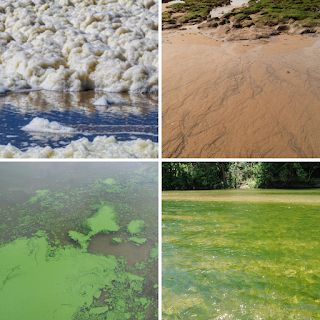
Being a Clinton County native, summer notifications of harmful algal blooms (HABs) at local beaches are nothing new. Certain places in our ...