Showing posts with label Carbon Monoxide. Show all posts

Tuesday, March 10, 2020

Don't Taste the Rainbow


No, we are not talking about Skittles! Our own homes are filled with numerous poisonous items that may look fun, but can be dangerous. It is important to be mindful of how we use and store these products.

Bath bombs, bath fizzies and other household products can sometimes look good enough to eat. With their variety of sizes, shapes and colors they can resemble candy, Kool-Aid or other sweet treats; so it should be no surprise when young children try to take a bite.

Laundry Pods are the latest craze. With their colorful swirls in a thin, squishy pillow small hands find these playful and enticing. In 2021, the American Association of Poison Control Centers (AAPC) managed 9,548 cases related to laundry detergent pod exposure in Children 5 years and younger - that's almost 800 a month!

To prevent a dangerous event from happening, the AAPC urges parents and caregivers to:
  • Save the Poison Help number, 1-800-222-1222, in your phone. You can also text POISON to 797979 to save the number in your phone.
  • Practice safe storage habits by keeping these types of items up, away and out of sight of children:
    • All medicines and pharmaceuticals
    • Tobacco and e-cigarette products
    • Alcohol
    • Laundry and cleaning supplies
    • Pesticides and insect repellents
    • Batteries
    • Any type of oil or lubricant
    • Personal care products
    • Other chemicals
  • Read and follow labels and directions of any potentially hazardous product, especially medicines.
  • Install carbon monoxide detectors in your home. Carbon monoxide is a colorless and odorless gas.
  • Practice safe food preparation and handling.

Call the Poison Help Hotline at 1-800-222-1222 immediately if you suspect a child has come in contact with any harmful substance.

If you have questions about the safety of your home you can request a visit from our Healthy Neighborhoods Program. This program is FREE to all Clinton County residents regardless of age or income.

Heather Alden
Public Health Educator
Healthy Neighborhoods Program
Environmental Health and Safety Division


Monday, October 8, 2018

Do You Know How to Keep Your Family Safe?


The heating season is upon us! In the North County many homeowners and renters depend on heat from fireplaces, wood stoves and other fossil-fuel heating appliances to keep their family warm during our cold winter months. Unfortunately, each year thousands of families experience costly property damages and injuries due to uncleaned or improperly cleaned heating sources. In fact, in the US there are more than 70,000 house fires annually causing more than $1.3 billion in property damage and over 2,500 injuries. According to the National Fire Protection Association (NFPA), chimney fires were the cause in approximately 30 percent of house fires. 
Good news…we are here to help! With the Healthy Neighborhoods Program here at the Clinton County Health Department, we can provide free education and safety products to anyone living in Clinton County. You read that right, FREE!! Over the past year, we have visited over 400 homes in Clinton County and given out countless home safety items to families just like you! 
  • Smoke detectors and carbon monoxide detector,
  • Child safety products (cabinet locks, shock stopper, safety gates), 
  • Asthma safety materials (allergen barrier mattress and pillow covers, dust wipes, cleaning supplies) and
  • Other safety products like first aid kits, flashlights, nightlights and non-slip bath treads.
Keep Your Home and Family Safe

While enjoying the glow and warmth of your fireplace or wood stove this winter we urge you to keep your family’s safety in mind. As you probably know, your chimney is an important ventilation system that allows smoke, toxins and dangerous fumes to escape your home. A clean chimney means a safer, more efficient fireplace and home heating appliance 


We are all busy and the to-do list is never ending but it is so important to stay on top of chimney cleaning. Each time you have a fire in your wood-stove or fireplace creosote and soot stick to the flue and masonry inside the chimney. When this creosote buildup gets too thick the heat and burning embers from the fire is often all it takes to spark a chimney fire

Creosote is a black or brown residue that can be crusty and flaky, tar-like, drippy and sticky or shiny and hardened. All forms are highly combustible and can result in a chimney fire.  

More Efficient Home Heating
We can all agree that we want to be more efficient, especially when it comes to heating our homes. Cleanliness and efficiency go hand in hand with our heating systems. The cleaner your home heating system the more efficient it will be. The creosote buildup that we were just talking about not only poses a potential fire hazard but also decreases the efficiency of your fireplace. This means that you will have to burn more wood or other fossil fuels to stay warm.
Birds, rodents, insects oh my! Did you know that these little buggers can get into and clog your flue, preventing the escape of toxic fumes?! As these toxic fumes buildup it increases your risk of carbon monoxide poisoning, also known as the silent killer. The Chimney Safety Institute of America (CSIA) reports that there are more than 200 carbon monoxide deaths each year.
During a Healthy Neighborhoods Program visit, we make sure that your home has working carbon monoxide detectors and smoke detectors. Schedule a visit today 518-565-4870!
Proper Maintenance Pays Off
Budgeting for and scheduling an annual (more frequent cleanings may be needed based upon usage) chimney cleaning and inspection will help: 
  • Ward off chimney fires, 
  • Decrease your risk for carbon monoxide poisoning, 
  • Increase heating efficiency, 
  • Reduce the wear and tear and buildup of by-products that can cause costly chimney repairs and 
  • Uncover minor masonry problems before they develop into larger, more expensive problems.

Clean chimneys don’t catch fire. Keep your home and family safe by keeping your heating source clean. 

Heather Alden, Public Health Educator
Maryann Barto, Public Health Educator

Environmental Health and Safety Division

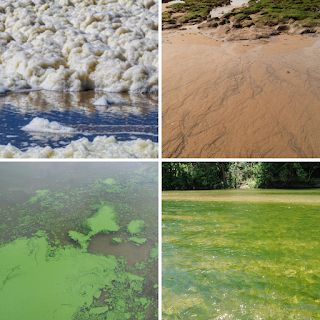
HABs – Say Algae You Later!

Being a Clinton County native, summer notifications of harmful algal blooms (HABs) at local beaches are nothing new. Certain places in our ...